The Story Behind TUNT’s Runaway Cover Art
The cover art for TUNT’s Runaway EP has a strange history behind it — one that reaches back long before the release itself. It's a connection between a father and a sons bands.
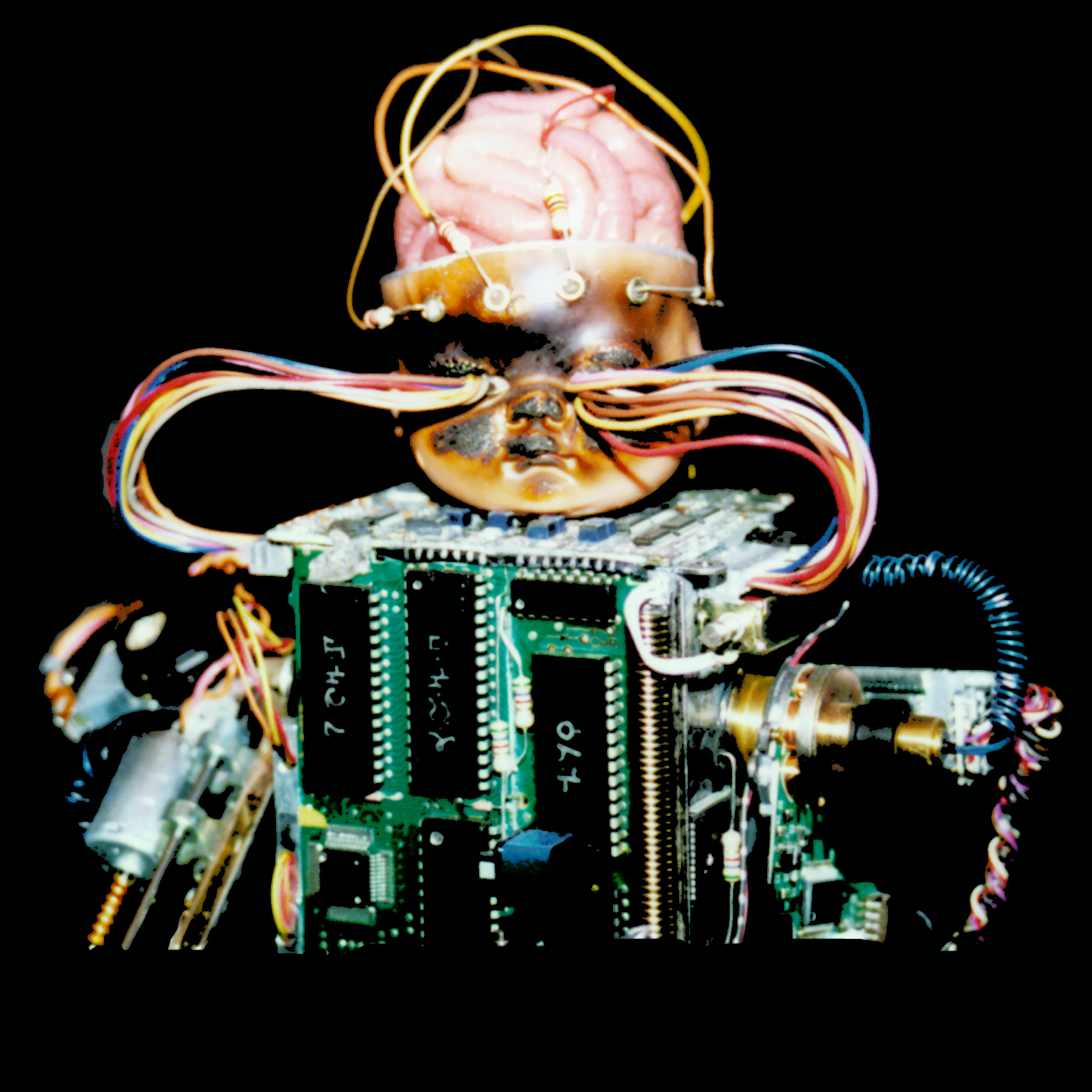
In 1998, Mark Alexander Southerland began building a sculpture of what would later become known as the automaton baby. At the time, it was originally called the Device Baby, because it was intended to become the visual centerpiece for Device, an upcoming CD release by Mark’s band DENT. Mark was the singer and guitarist of DENT, and the sculpture was being created as part of the band’s larger artistic identity.
The piece was not simply a drawing or a prop. It was a physical sculpture with a rotating head and posable arms, built to feel part machine, part infant, and part damaged relic from some unknown future. It had the unsettling quality of something both alive and artificial — innocent, but mechanical. That contradiction is part of what made the image stick.
Unfortunately, the original sculpture did not survive. After being completed, it was left on Mark’s desk. A roommate’s cat knocked it off the desk, and the sculpture shattered into pieces. The only usable remains were the preliminary photographs taken before its unexpected destruction.
For years, those images were all that remained of the Device Baby.
Now, decades later, the automaton baby has found a second life through TUNT. Talon Southerland became attached to the image, seeing something in it that still felt alive, strange, and relevant. What began as part of DENT’s visual world in 1998 has now resurfaced as part of a new generation’s music and identity.
That connection gives the Runaway cover more weight than a typical album graphic. It is not just a design choice. It is a recovered piece of family history, band history, and underground art history — carried from one era into another.
The automaton baby fits TUNT because Runaway itself lives in that same space between youth, damage, distortion, and memory. The image feels broken but memorable, mechanical but emotional, old but somehow new again. It represents survival in a strange way: the sculpture was destroyed, but the image remained.
And now, through TUNT, the Device Baby has finally become what it was always meant to be — the face of a release.